


NYT Games: Wordle & Crossword
4.811.45K Reviews
App Specs
- Version
- 6.39.0
- Updated On
- License
- Free
- Downloads
- 10,000,000+
- Developer
- The New York Times Company
- Categories
- Word
- Platform
- Android, iOS
Screenshots
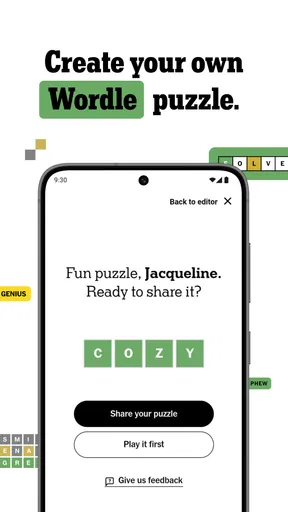
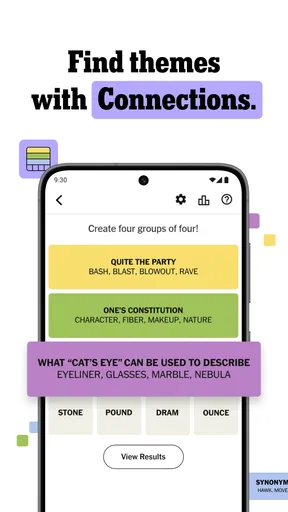
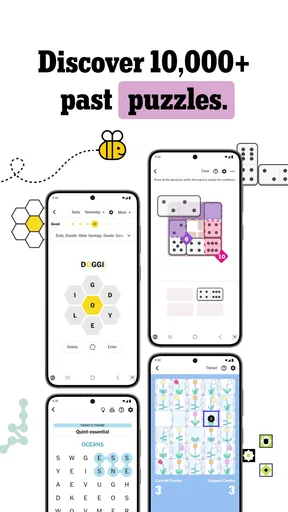
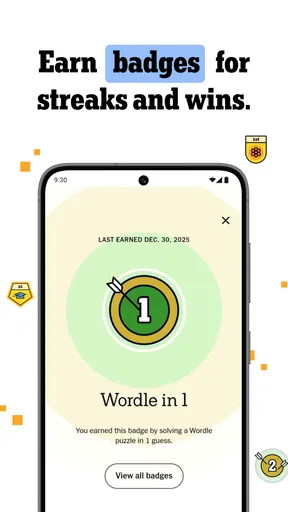
 Analysis by AppCompare
I tend to judge a shared-device puzzle game by what happens when several people reach for it at different times: can each person enjoy a quick turn without turning the phone into a household scoreboard? NYT Games: Wordle & Crossword works best when everyone treats the puzzles as a small personal challenge, then chooses what to share. That makes it a pleasant fit for a kitchen counter or a quiet evening, though it is worth agreeing on how you handle spoilers before opening a puzzle together.
A small daily ritual that can suit a household
Picture a weekday morning: one person tries Wordle over breakfast, while someone else picks up the phone later for a crossword during a break. The appeal is that these are different kinds of word play in one place. Wordle gives you a compact deduction task; a crossword offers a longer session with clues to work through at your own pace. I like that a household can enjoy both without needing to settle on one shared style of game.
There is a useful distinction between playing side by side and taking turns on one device. Side by side, people can discuss possible words or clues, but that changes the challenge from individual solving into collaboration. Taking turns preserves the solo feel, yet another person might see the grid or learn the answer accidentally. I’d decide which kind of session you want before passing the phone around, especially if someone in the household is saving the puzzle for later.
The app is free to download, and its in-app purchases range from $0.99 to $299.99 per item. That makes it sensible to check the purchase screen before confirming anything, particularly on a device used by more than one person. The practical point is not to assume that a shared phone automatically means a shared account arrangement: each household should understand who is using the device and who is responsible for any purchase decision.
Keep personal progress and shared play distinct
For a shared phone or tablet, the main question is less about the puzzles and more about boundaries. A puzzle can feel personal when someone is trying to maintain a streak or work through a clue without help. If several people use the same device, it helps to agree that nobody opens another person’s in-progress game without asking. That small courtesy prevents a well-meant hint from spoiling the satisfaction of solving it independently.
I would also avoid treating one person’s progress as proof of how well everyone is doing. Word games depend on vocabulary, familiarity with clue conventions, and the mood you bring to the puzzle; a slower solve is not a failure. A relaxed household routine might mean letting each person choose a puzzle, then comparing approaches only after everyone has finished. That keeps the conversation friendly without turning completion times or streaks into a contest.
When more than one person wants to play regularly, using separate devices can make the boundaries clearer than passing a single phone back and forth. It also avoids the awkward moment when one player sees a clue or answer another player hoped to discover. I would still confirm which account and device are in use before making purchases or assuming that progress will appear in the same place. The app’s cross-device convenience is useful, but it should not be mistaken for a promise that every household member has a separate profile.
Worth Reading Before You Choose

Switching to Android Auto Means Rethinking Your Driving Routine

Google Calendar Makes a Crowded Week Easier to Manage

Baby Panda World Brings Quick Play to Modern Phones, but Its Game Library Feels Busy

ESPN’s Live Game View Makes Following Close Games Easier

QuizzLand Review: A Good Fit for Short Trivia Breaks, Not Every Player

Basketball Stars: Multiplayer Is Fast, but Can It Recover When Matches Go Wrong?
Who will enjoy the mix, and who may want something else
This is a good choice for people who enjoy wordplay in short, repeatable sessions and want more than one kind of challenge to return to. It can fit a commuter’s quiet break, a coffee pause, or a low-key evening when a fast action game would feel like too much. The mix also helps if your preferences change by the day: a brief word deduction puzzle can be enough when you are busy, while a crossword is there when you want to settle in longer.
Compared with a basic word-search or an endless word puzzle, this app leans more on deduction, clue interpretation, and a sense of completing a particular challenge. That makes it more satisfying for players who like a defined goal, but less suitable for someone who wants an uninterrupted stream of new rounds or a game that requires little reading. If you mainly want a large collection of unrelated casual puzzles, a broader puzzle bundle may be a better match. Here, the draw is the familiar Wordle and crossword experience in one app, not maximum variety in every possible word-game format.
It is also worth being realistic about the learning curve. A crossword can be frustrating if you do not know common clue styles or if a particular clue depends on knowledge outside your interests. Hints and checking can help you keep moving, but using them too early may take away the pleasure of making your own connections. I find it more rewarding to fill in the answers I can solve first, then return to the stubborn corners with a hint only when I am genuinely stuck.
Age, trust, and a sensible way to play together
The game is rated Everyone, which makes it broadly suitable for a general audience, but that label does not mean every puzzle will be equally easy or enjoyable for every age. Younger players may benefit from playing alongside an adult who can explain unfamiliar words or crossword clues. That can turn a difficult moment into a conversation, although I would let the child do the guessing rather than immediately supplying answers.
For adults sharing a device with children, I would keep purchase decisions separate from the fun of solving. The app is free, but optional in-app items can cost from $0.99 to $299.99 each, so a child should not be left to make a purchase choice without the device owner’s guidance. This is a straightforward household rule rather than a reason to avoid the game: decide who can approve purchases, and make sure everyone knows before tapping through a payment screen.
The developer is The New York Times Company, and the game has an average rating of 4.7 from 108K ratings, with 9.9K reviews and over 5M installs. It was released on Nov 17, 2016, and version 6.7.0 requires Android 10 or later. Those figures suggest that it has found a substantial audience, but popularity does not guarantee that every puzzle style will suit your household. I would choose it for people who genuinely like word challenges, not simply because it is familiar or widely used.
The Intriguing World of Puzzles
First off, NYT Games: Wordle & Crossword is like a treasure trove of word puzzles. As a word enthusiast, I found myself diving deep into the app, spending hours solving puzzles. It’s not just about finding the right words; it’s about challenging yourself every day.
Wordle – The Daily Challenge
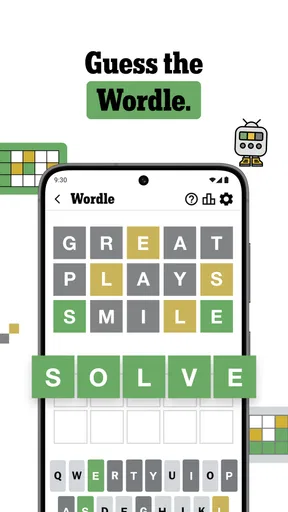
Wordle is quite the sensation, isn’t it? Each day, you’re presented with a new five-letter word to guess. The catch? You only get six tries. I love the simplicity and the thrill of getting it right just in time. Plus, the feedback system, where correct letters are highlighted, keeps you on your toes.
There’s something incredibly satisfying about cracking the word of the day. It’s almost like a morning ritual now, accompanied by my cup of coffee. The app keeps track of your streaks, making each win feel even more rewarding.
Crossword Conundrums
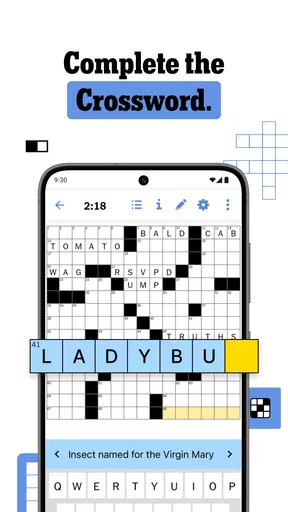
Next up, the Crosswords. If you’re someone who enjoys a more extensive mental workout, these are your go-to. They range from mini puzzles, which are perfect for a quick break, to the more intricate Sunday editions. It’s like having the New York Times delivered to your pocket every day.
I appreciate the way the app offers hints and the ability to check your progress without giving too much away. It feels like the right balance between guidance and challenge. Plus, there’s a sense of community; knowing that thousands of others are tackling the same puzzle makes it all the more exciting.
User Experience and Interface
The interface is clean and intuitive. You don’t need a manual to get started, which is always a plus. I found the navigation smooth, and jumping between Wordle and Crossword is a breeze. The design is minimalistic, which keeps the focus on the puzzles, and that’s exactly what I want in a game app.
Moreover, the app syncs across devices, so whether I’m on my phone or tablet, my progress is always up to date. It’s these little conveniences that make a big difference in user experience.
NYT Games: Wordle & Crossword keeps evolving, with regular updates and new puzzles. It’s like having a puzzle magazine subscription, minus the paper cuts.
Final Thoughts
All in all, if you’re a fan of word games, NYT Games: Wordle & Crossword is a must-have. It combines daily challenges with classic puzzles, offering something for both casual gamers and hardcore puzzle aficionados. Plus, who doesn’t love a game that also makes you a little bit smarter?
So, whether you’re waiting for your coffee to brew or just need a quick brain break, this app is worth checking out. Trust me, your vocabulary will thank you!
Making the most of the two puzzle styles
The strongest way to use the app, in my experience, is to treat Wordle and the crossword as different kinds of attention rather than interchangeable levels. Wordle is a compact exercise in testing a theory against limited feedback. A crossword asks you to build a web of answers, where one solved entry can make several nearby clues easier. Switching between them gives the app a useful rhythm: when I have only a minute, I can make a few Wordle guesses; when I have more time, I can work through a crossword section.
A practical Wordle habit is to think carefully about what each guess is meant to test. Instead of using a guess only to chase one promising answer, I try to choose a word that can reveal useful letter information when I am uncertain. That does not guarantee a solve, and it is still possible to get boxed in by several plausible options, but it makes the limited attempts feel more deliberate. I also resist looking up the answer after a missed day; preserving the next puzzle’s surprise is more enjoyable than turning the daily challenge into a backlog to clear.
For a crossword, I find it useful to move around rather than stare at one difficult clue until it becomes irritating. Fill in the straightforward answers first, then revisit the uncertain ones with crossing letters in place. Checking progress can be a helpful diagnostic when I suspect a small mistake has thrown off a whole corner, but I would use it after making a genuine attempt. Otherwise, the tool can replace the satisfying process of spotting where a clue and its crossings disagree.
What to expect from the routine
People often want to know whether this is a game they can enjoy in very short bursts or whether it demands a long sit-down. I think it supports both, but the answer depends on the puzzle. Wordle is naturally suited to a brief visit, while a crossword can expand to fill the time you give it. You can pause your own solving and return later, but the experience is best when you remember what you were considering; I sometimes leave myself a mental note about an uncertain clue rather than restarting the puzzle from the beginning of my thinking.
Another common question is whether a newcomer needs to be an expert. Not for Wordle: its rules are easy to grasp, though the deduction can still be tricky. Crosswords are less immediately approachable because clue conventions and general knowledge matter. I would begin with a mini puzzle if I wanted a gentler introduction, and I would treat hints as a learning aid rather than a score penalty. Seeing why a clue works can build confidence for the next one, while revealing every answer at once usually ends the useful part of the challenge.
The app is not the best fit for someone who dislikes word-based tasks, wants a highly social multiplayer game, or expects a fresh, endless feed of unrelated puzzles. Its pleasures are quieter and more focused. Likewise, if you prefer pen and paper, a printed crossword may be more comfortable for marking several possibilities at once. The digital version is more convenient to carry and offers assistance, but the screen and the temptation to check answers can change the feel of solving.
A measured recommendation
For a household, my advice is to make the game a shared occasion without assuming it is a shared account or a shared score. Let each person choose whether to solve alone or talk through a clue together, keep purchases under the device owner’s control, and avoid revealing a daily answer to someone who has not played yet. Those simple habits preserve the best part of the app: the moment when a word finally clicks.
My recommendation is strongest for readers who like thoughtful word puzzles and appreciate having both a quick challenge and a more involved one close at hand. If that sounds like you, the free download is an easy way to try the style before deciding whether any optional purchase is worthwhile. If your ideal game is fast, noisy, competitive, or built around constant novelty, I would look elsewhere. For a calm coffee-break ritual, a solo commute, or a friendly puzzle conversation at home, this one earns a place on my device.
Pros
- Intuitive and user-friendly interface.
- Daily puzzles keep content fresh.
- Engaging variety of word games.
- Offline play mode available.
- Visually appealing design.
Cons
- Limited free content without subscription.
- Occasional in-app ad interruptions.
- Some puzzles may be too challenging.
- Requires internet for updates.
- No multiplayer or social features.
FAQs for NYT Games: Wordle & Crossword
What is NYT Games: Wordle & Crossword all about?
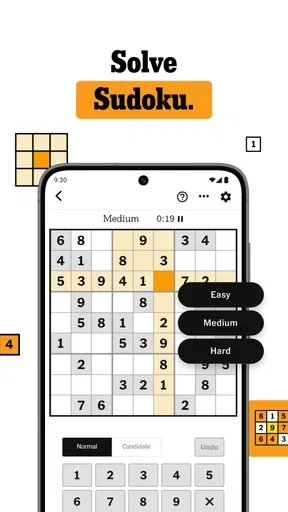
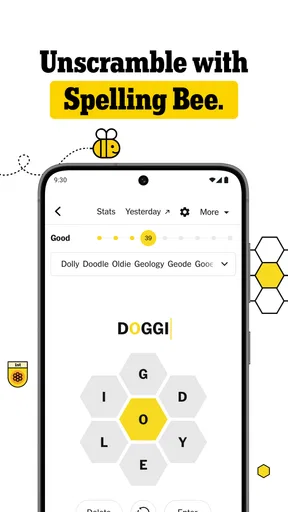
NYT Games: Wordle & Crossword is an app offering a variety of engaging word puzzles, including the popular Wordle and classic New York Times Crossword. It challenges players’ vocabulary and problem-solving skills, providing daily puzzles that vary in difficulty. Perfect for those who enjoy word games and want to keep their minds sharp.
Is the NYT Games app free to use?
The NYT Games app offers a mix of free and premium content. While you can access a limited number of puzzles without a subscription, a full subscription is required to unlock the complete range of puzzles, including additional features like puzzle archives and exclusive games. This allows users to enjoy a richer gaming experience.
What devices are compatible with NYT Games: Wordle & Crossword?
NYT Games: Wordle & Crossword is available on both Android and iOS platforms, ensuring compatibility with a wide range of smartphones and tablets. It requires a relatively modern operating system to run smoothly, so users should check the app's requirements on the Google Play Store or Apple App Store before downloading.
How often are new puzzles added to the app?
New puzzles are added daily to NYT Games: Wordle & Crossword, ensuring fresh content for users every day. This includes a new Wordle puzzle each day, as well as a daily New York Times Crossword. The app also offers a variety of mini-games and challenges, keeping gameplay exciting and varied.
Can I play NYT Games offline?
Yes, you can play some features of NYT Games: Wordle & Crossword offline. Once puzzles are downloaded, they can be accessed without an internet connection. However, downloading new puzzles and accessing certain features, such as leaderboards or multiplayer modes, will require an internet connection.


